
Ditch AI, Hire a Human
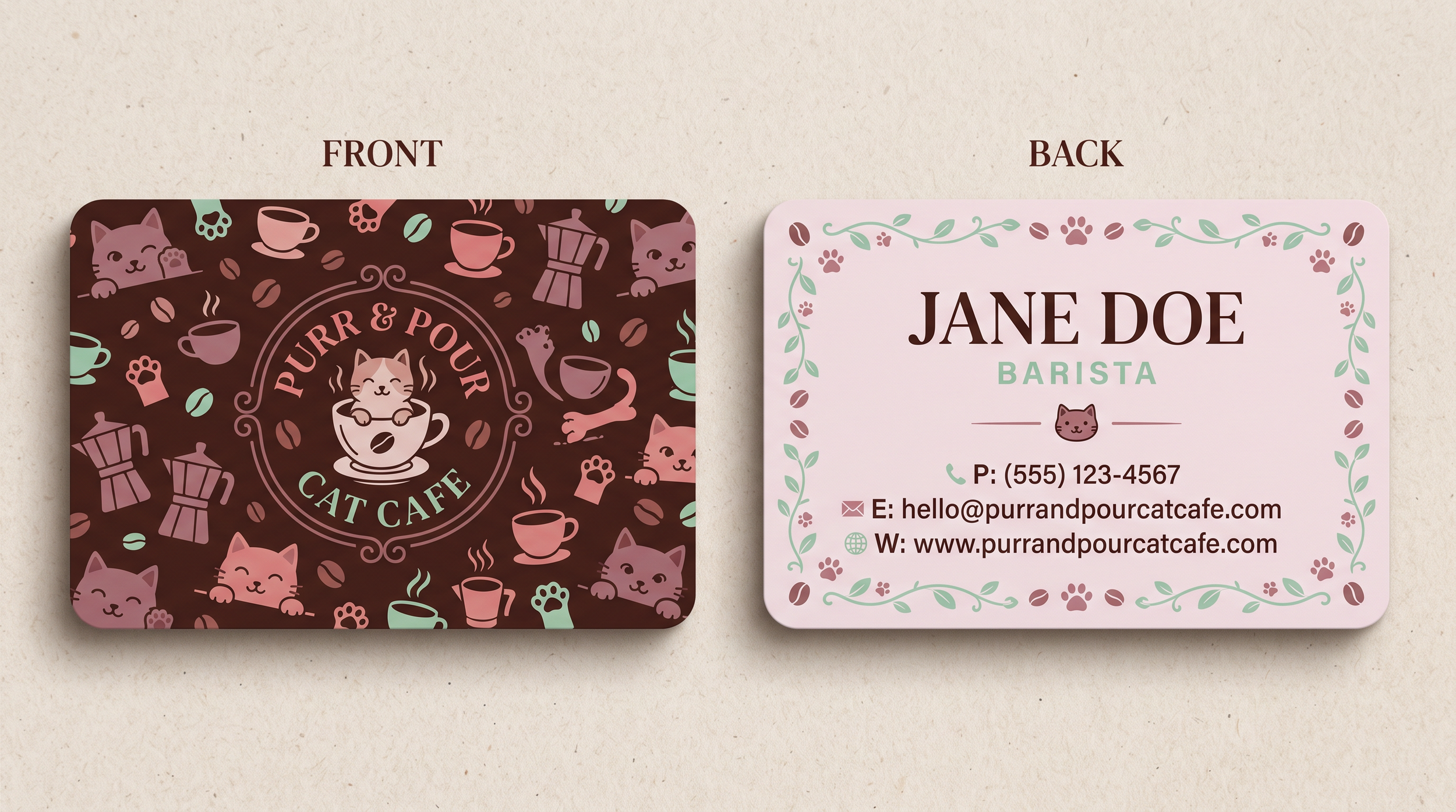
image generated by artlist.io
Although I love the flexibility and creative autonomy of the freelance lifestyle, I’ve found myself missing the day-to-day banter between coworkers. I need a little variety in my day to motivate myself and prevent depressive episodes where I spiral into a pit of directionless contempt for the world and everything around me—starting with how Southern California makes so much dust—HOW IS MY DESK DUSTY ALREADY WHEN I JUST DID A MANIC THOROUGH CLEANING LAST WEEKEND?!
That said, I’ve been working part-time as a print specialist at Staples for the last 3 months in a desperate effort to avoid biweekly crash-outs over inconveniences like dust. The new role is not without its challenges—which may be a great topic for another day—but it has been a welcome change of pace and an opportunity to become more attuned to the needs, interests, sorrows, and joys of my fellow humans from all walks of life who need something printed—usually with urgency. This is great because I get to see ALL the printed AI slop that big tech thinks will make me irrelevant.
And don’t get me wrong, AI can definitely be a helpful tool. I use Grammarly to suggest grammatical changes and alternative word choices for what I am writing now. However, I refuse to let the AI write or design the core concept for me—I’ve got enough bad ideas for the two of us, trust me. So when you see an em dash in my writing, rest assured, it’s entirely organic. Yes, I am that bad at writing. I’m surprised you’re surprised by this. What else am I supposed to use; a semicolon? Gross. I digress.
While at Staples, printing all things AI-designed, I’ve compiled a list of observations to make the case that designers are absolutely necessary investments for businesses, both small and large.
Human creatives are a better business investment than AI because:
-
When prompting AI to create a design, Canva and ChatGPT do a poor job of producing high-resolution CMYK-ready files, rendering final proofs pixelated and off-color. To be fair, color calibration and conversion are an entire science, but this merely reinforces the incentive to invest in an experienced print designer to create print-ready design assets. A designer will be able to interpret and adapt the color for optimal output, ensure it’s 300 dpi at the required size, and anticipate challenges or other necessary specifications. Even when I prompted artlist.io (which uses Nano Banana 2.1) to generate a 24-inch by 32-inch 300 ppi poster PDF, with a .125” bleed, .75-inch margin with a finished size of 24.25 × 32.25, it did not provide a printable file to those specs. In fact, it doesn’t even allow you to choose a size that would match your print needs. I included my prompt and subsequent slop image below as an example.
-
Too often, AI places small text right up next to the trim line. At Staples, I literally print thousands of business cards in a shift. We do our best to adjust the design placement so that content fits on each card. However, even the best associates struggle to keep phone numbers from being trimmed off the bottom when ChatGPT has created a design where the logo skims the top edge and the information rests on the bottom edge. Consideration for clear and negative space is a foundational design principle that common AI systems do not comprehend. A designer will consider the 1mm variable shift in the trimming machine and know to create a generous bleed, ensuring your business card design keeps all important information away from the trim.
-
AI doesn’t know what legibility looks like. I’ve seen hundreds of designs with 6pt text or smaller that are illegible in the final product. Tiny text you might barely be able to read on screen will likely look like a smudge in print. QR codes generated for business cards are often so tiny that there’s no way a phone will be able to focus clearly enough to scan them. A designer will understand whether text will be legible at scale and what fonts and color contrast will work within the design so that everything functions as intended. If you want your info to be legible, hire a designer.
-
AI creates weird patterns and forms in hyper-realistic and illustrative imagery. Restaurants have been the biggest AI adopters I’ve seen, printing banners, posters, and menus with AI-generated images of food and other products. AI creates alien, melty-corn, noodly surfaces in food to fill in close-up details of eggs, meat, coffee foam, bread, or other items. I would rather see low-res phone photos of your actual food than whatever trypophobia-inducing nightmare you’ve prompted with AI. For art and accents, I’ve even seen weird geometric patterns in generated watercolor textures and nonsensical forms appear in illustrations. See my example images at the end.
-
Although image generation has come a long way in the last year, I’ve still seen some weird distortions in limbs or objects that end up disappearing behind obstructions, only to reappear or distort on the other side. When printing a portrait of a toddler, it was obvious someone had used AI to add extra floof to a little girl’s dress, because behind the added layers of tulle, her foot had turned into a bento-box octopus hot dog. That poor baby girl. This emphasizes the artificial aspect of AI, since it doesn’t actually have intelligence. Compare that to a good designer who has the wherewithal to comprehend when proportions, balance, or anatomy are off, which they can usually correct without an additional prompt.
-
Nano Banana’s basic plan is $119 for 15,000 credits per year, while it costs 2K credits to generate 1 high-resolution image and nearly 600 credits to input a reference image for your prompt. Unless you’re explicit and know exactly every spec and consideration for your design output from the start, you’re looking at two or three mid designs before you need to upgrade your plan. A designer could create a unique-to-you layout at that same price, even offer a couple of options, and ensure it’s ready for printing.
Additionally, there’s intangible cost to using AI in business ads. Where a designer will ask follow-up questions to understand your goals and current brand identity, and suggest alternative styles or directions, AI will just regurgitate what’s already out there, making your brand look and sound like every other business and their mother that uses AI weakening your brand identity. Not to mention, distrust and dislike of AI in general could drive potential customers away. In a Havard study, AI-generated ads resulted in “14% weaker on short-term sales potential and 17% weaker on long-term brand equity” (Research: AI-Generated Ads Perform Worse Than Human-Made Ones—Even When Customers Can’t Tell Them Apart. Harvard Business Review. 2026). Small independent restaurants in LA can average $700 to $2,700 in sales each day, which could mean a potential loss of $200 a day or nearly $70K annually.
-
This may sound harsh, but sit with me for a moment. Costs are rising for everyone, making it much more difficult to run a small business than to run major companies that can absorb more of those costs. While small businesses ask consumers to support local, they’re turning around and handing their money to the big corporations they compete against. I ask small businesses to support their fellow small business owners for their marketing, photography, creative writing, and design needs.
-
I don’t think I could be harsh enough when I say this. If you are a multi-million/billion dollar company, and you’re firing your creative teams to rely on AI-generated ads, packaging, and brand assets, you’re the kind of greedy oppressor Jesus of Nazareth, Plato, Lao Tzu, and even infamous capitalist Adam Smith and hundreds of other cross-cultural great philosophers warned us about. You have all the money in the world to hire appropriate staff and create jobs in this struggling economy, but if you’re firing entire teams just so you can use that money to payout dividends to wealthy shareholders and raise executive salaries, you disgust me.
There you have eight reasons why hiring a designer is a much better business decision than relying on AI. A designer will be able to anticipate needs, ensure proper output, and design with your specific brand and goals in mind. By choosing to hire a trained creative human rather than AI, you’re supporting small businesses, investing in human flourishing, and building a stronger, more trusted brand identity for yourself in ways AI can never provide.
*I state AI is still in infancy based on a claim by former OpenAI and Anthropic AI data trainer Jacob Coxon, who likened the current processing ability of most AI models to that of a “very precocious toddler.” (Jacob Coxon On Witnessing the Existential Threat of AI from the Inside. The Daily Show. October 5, 2026)
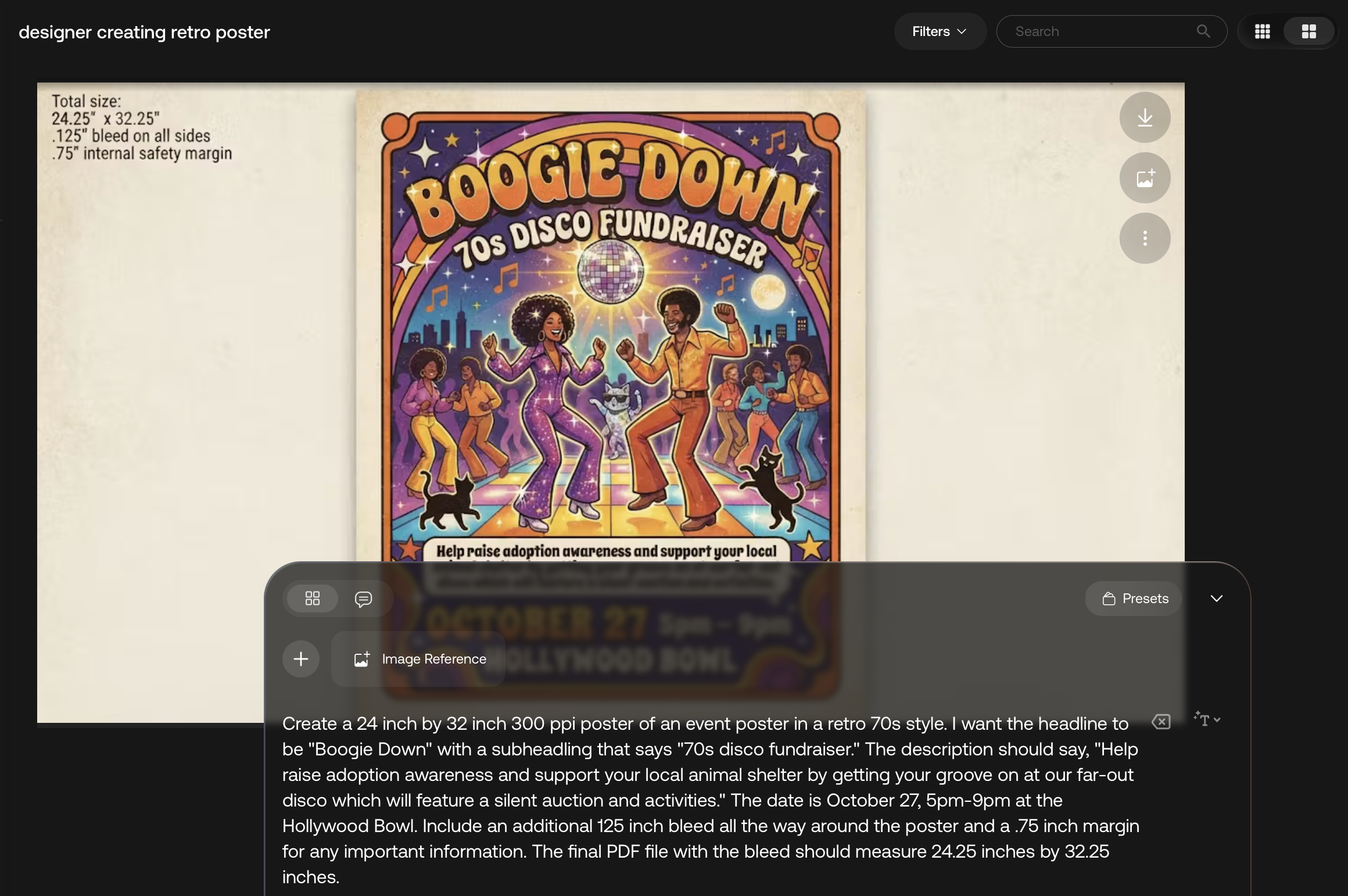
Even prompting with specific file instructions didn’t render the correct output. Also, why is there a sparkly cat with sunglasses and tenticle arms in the background?
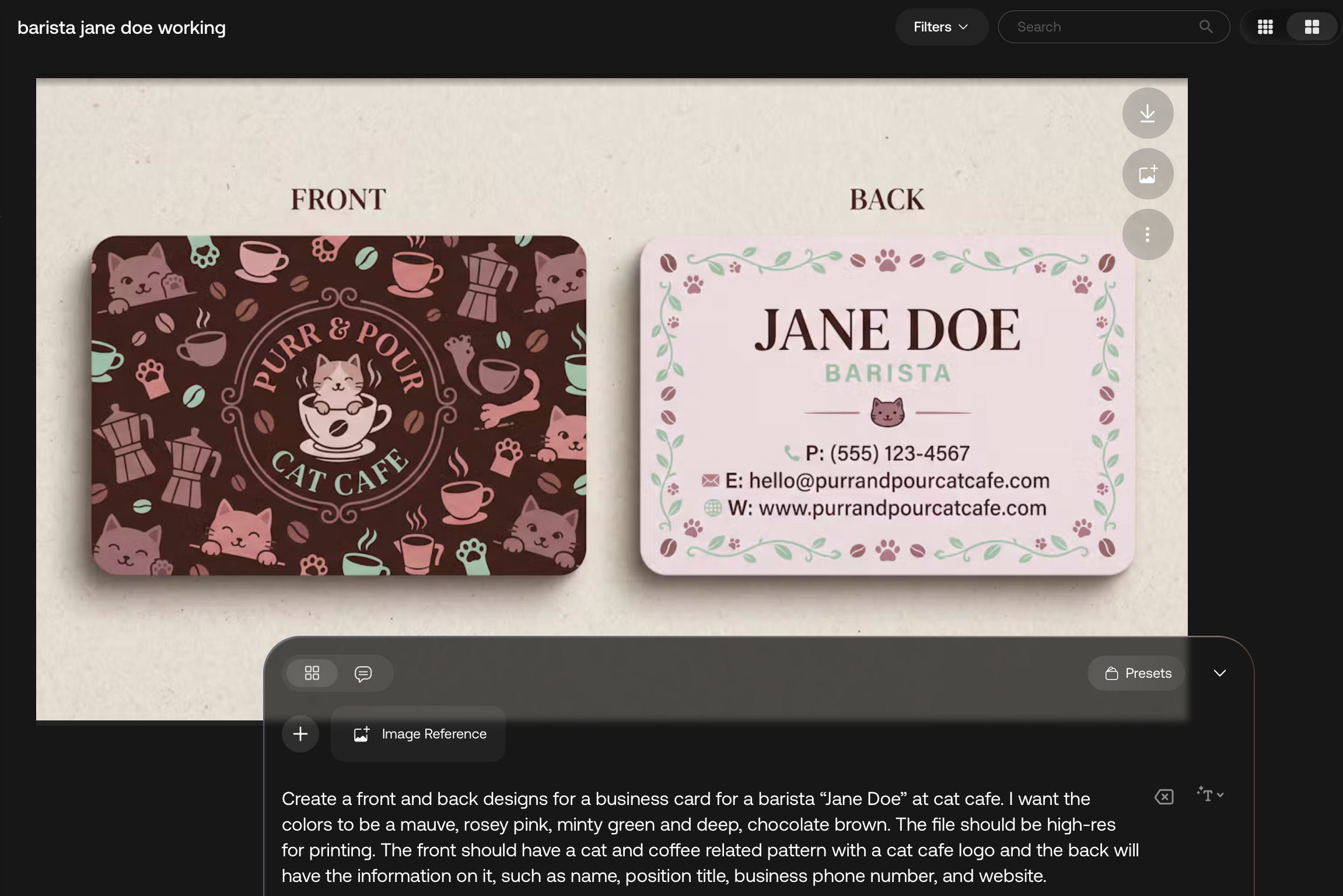
I was somewhat impressed by what it created, given my design instructions were vague.
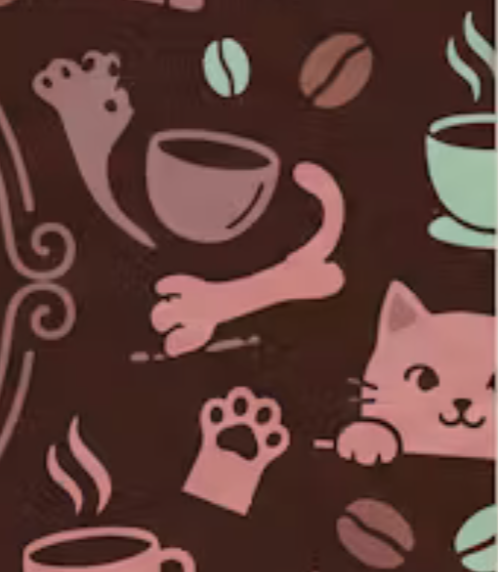
You might wonder, “WTF is this?!” My answer: something you wouldn’t see a human make for you.